Cordless vs Corded Blinds: Safety and Which to Choose
Compare cordless and corded blinds on child safety, ease of use and fit, see what current US standards require, and learn how to make old blinds safer.
 Save
Cordless blinds are the safer choice, especially in any home where young children live or visit. The CPSC states that cordless window coverings are the only option that eliminates the strangulation hazard from cords. Corded blinds can still be used more safely with a few changes, but they only reduce the risk.
Quick answer
Pick cordless (or a design where the cords are fully out of reach) for bedrooms, nurseries, playrooms and any room a child can enter. Corded blinds make sense only where no young child spends time, and even then the cords should be kept short and secured.
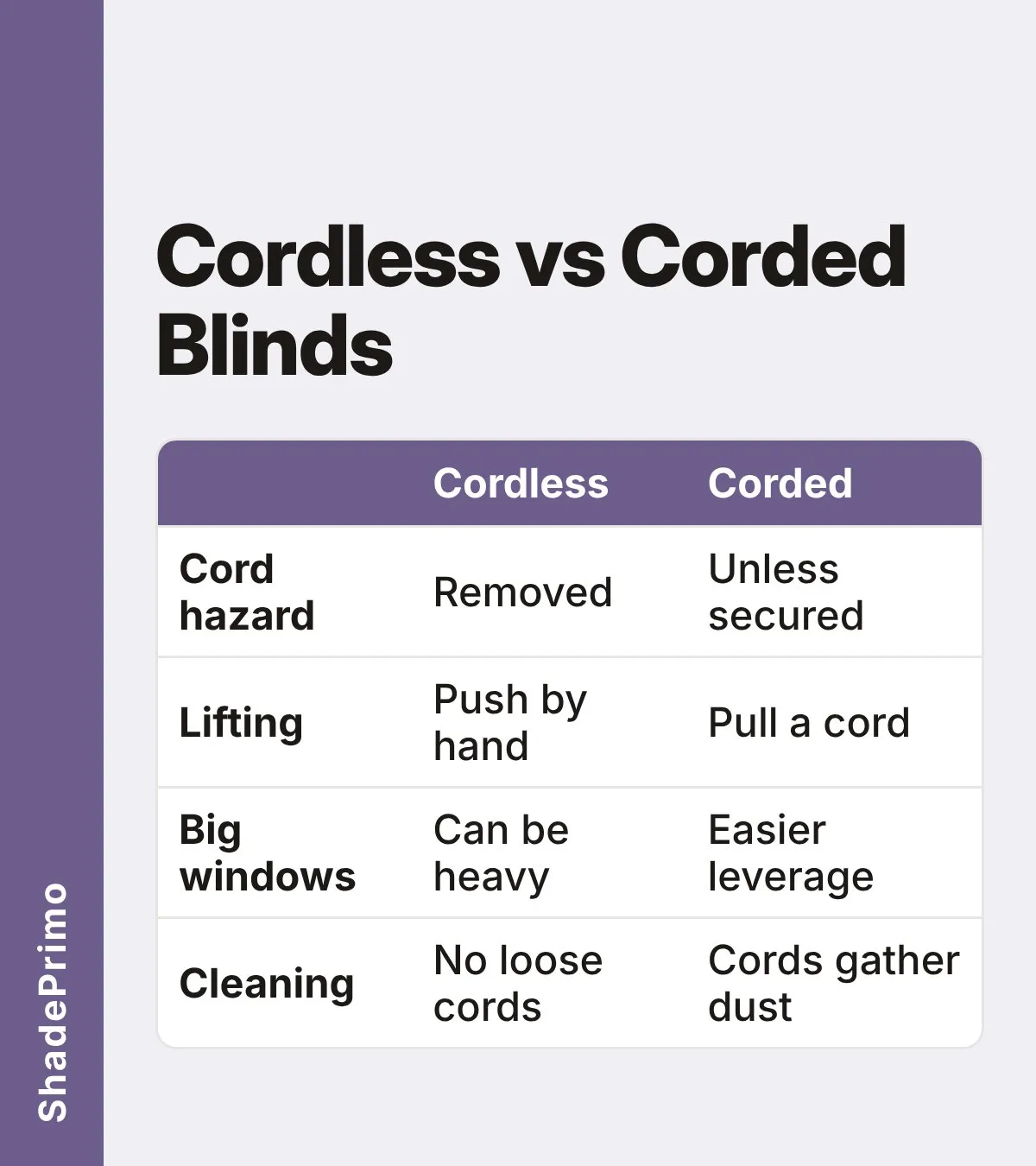
| Cordless | Corded | |
|---|---|---|
| Strangulation hazard from operating cords | Removed | Present unless cords are secured |
| How you lift it | Push or pull the bottom rail by hand | Pull a cord or chain |
| Large or tall windows | Can be heavy to move by hand | Easier leverage for big blinds |
| Cleaning and tidy look | No dangling cords to collect dust | Cords hang loose and need care |
| Fits standard US stock rules | Yes | Only with inaccessible cords |
Why cords are a problem
Window blind, shade and drapery cords can form loops. The CPSC warns that children have strangled on these cords, and that it can happen in moments, even with an adult in the room. The hazard is not only the pull cord you see. Older blinds have inner lift cords running through the slats that a child can pull out into a loop.
Tilt wands and loops that hang near a bed, crib or couch are a particular concern, because a child can climb up and reach them. That is why the first rule is to treat the window area as part of the room’s safety plan, not just a decoration.
What the current standards require
The US industry standard ANSI/WCMA A100.1-2022 took effect on June 1, 2024, according to the Window Covering Manufacturers Association (WCMA). It applies to products made on or after that date. Key points:
- Stock products sold in stores and online must be cordless or have inaccessible cords.
- Custom (made-to-order) products can no longer have free-hanging operating cords, free-hanging tilt cords or multiple cords joined by a single connector.
- Continuous cord loops and bead chains are not allowed on horizontal slatted custom products.
- Some custom designs, such as retractable cord systems or rigid shrouds, are still allowed if they meet enhanced performance requirements.
There is also a voluntary “Best for Kids” certification from WCMA. It covers products with no cords, with inaccessible inner cords, or with accessible inner cords that cannot form a hazardous loop under the standard’s test. Look for the “certified” label on packaging when you shop.
Rules outside the US differ. If you live in Canada, the UK or Australia, check your national regulator or ask the retailer how the product meets local safety rules, then apply the same common-sense steps below.
How to choose
- List the rooms. Mark which rooms children use, such as bedrooms, nurseries and play areas. Choose cordless for all of these.
- Check window size. Very wide or tall blinds can be awkward to lift by hand. If the window is hard to reach, consider a motorized option, which is also cordless.
- Check the product, not just the word. Ask whether the blind is truly cordless and whether any inner lift cords are accessible. Look for the “Best for Kids” certified label if it matters to you.
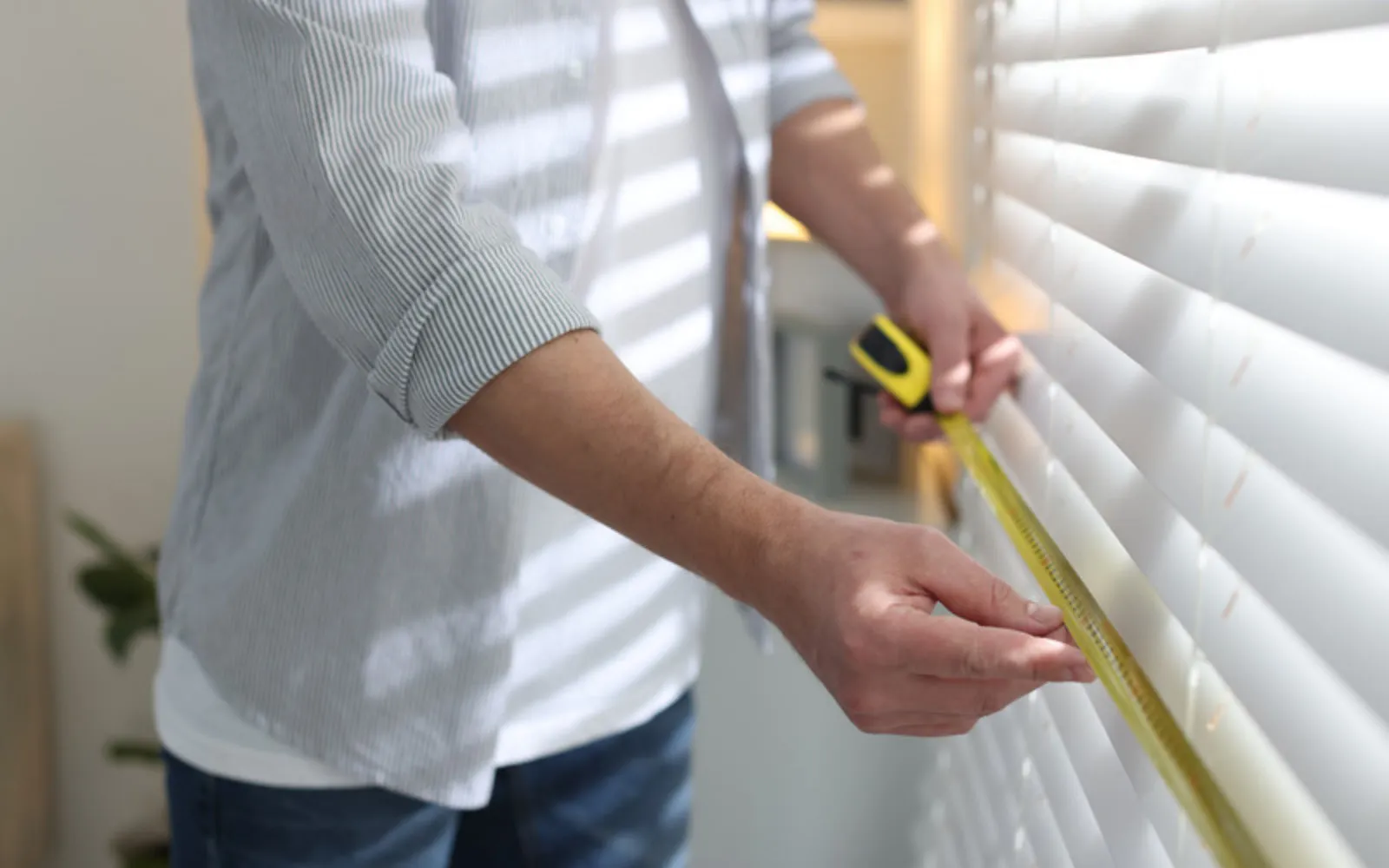
- Measure carefully. A well-fitting blind sits tight and neat. Use a guide such as how to measure windows for blinds before you order.
- Plan the replacement. Replace the worst offenders first: older blinds and any in a child’s bedroom.
Cordless options to consider
Cordless is a feature, not a single product type, so you can find it across several styles:
- Blinds with a push-up or pull-down bottom rail. You move the rail by hand, and the lift system holds it in place. This is the most common cordless design for slatted blinds.
- Cellular, roller and Roman shades. Many shades come in cordless versions that lift by hand, with no pull cord at the side.
- Motorized blinds and shades. A remote, app or wall switch moves the covering, so there is nothing to pull. This can suit tall, wide or hard-to-reach windows.
- Designs with inaccessible cords. Some products keep cords inside a rigid shroud or a retractable system so they cannot be reached. Ask the seller how the product meets the standard.
Whichever you choose, test the blind in the shop or at home before relying on it. A cordless blind should stay where you leave it, lift smoothly and lower without slamming.
How to make existing corded blinds safer
If you cannot replace the blinds right now, the CPSC suggests these steps to reduce risk:
- Shorten pull cords so none dangle.
- Fit cord stops. They should sit 1 to 2 inches from the head rail when the blind is fully lowered.
- Anchor continuous-loop cords to the floor or wall, keeping them taut but still usable.
- Move cribs, beds, furniture and toys away from windows and cords, ideally to another wall.
- Do not leave cords tied in loops, and keep cord ends tucked away.
The Window Covering Safety Council offers free retrofit kits. The CPSC notes that these kits do not solve dangling pull cords on many blinds, so they are a stopgap, not a cure.
Common mistakes
- Assuming a short cord is a safe cord. Any loop that can reach a child is a hazard. Shorten it and secure it.
- Ignoring inner cords. A cordless-looking blind may still have accessible inner lift cords. Ask before you buy.
- Keeping very old blinds. The CPSC says most blinds sold before November 2000 have inner cords that can form a loop, and advises replacing them immediately.
- Leaving a crib or bed under the window. Even cordless blinds are best kept clear of sleeping areas where possible.
- Tying cords up high but loosely. A loose bundle can still come down. Use a proper cord wrap or stop.
When to get help
If you are unsure what kind of cords your blinds have, ask the retailer or manufacturer, or contact the Window Covering Safety Council for guidance. If a blind is broken, or a cord has formed a loop you cannot remove safely, take the blind down and replace it rather than trying to patch it.
Sources
 Save
Frequently asked questions
Are cordless blinds completely safe for children?
The US Consumer Product Safety Commission (CPSC) says cordless window coverings are the only option that eliminates the strangulation hazard from operating cords. Check that the product has no accessible inner cords either, and keep furniture away from windows.
Can I make my existing corded blinds safer?
Yes. Shorten or remove dangling pull cords, add cord stops, anchor continuous loops to the wall or floor, and move cribs and beds away from windows. These steps reduce the risk, but replacing the blinds with cordless ones removes it.
Should I replace very old blinds?
The CPSC says most blinds sold before November 2000 have inner lift cords that can form a loop, and advises replacing them right away. A retrofit kit does not fix every older design.
Do cordless blinds work for large or heavy windows?
Often, but very tall or wide blinds can be hard to lift by hand. Motorized blinds are also cordless and can suit hard-to-reach or oversized windows.